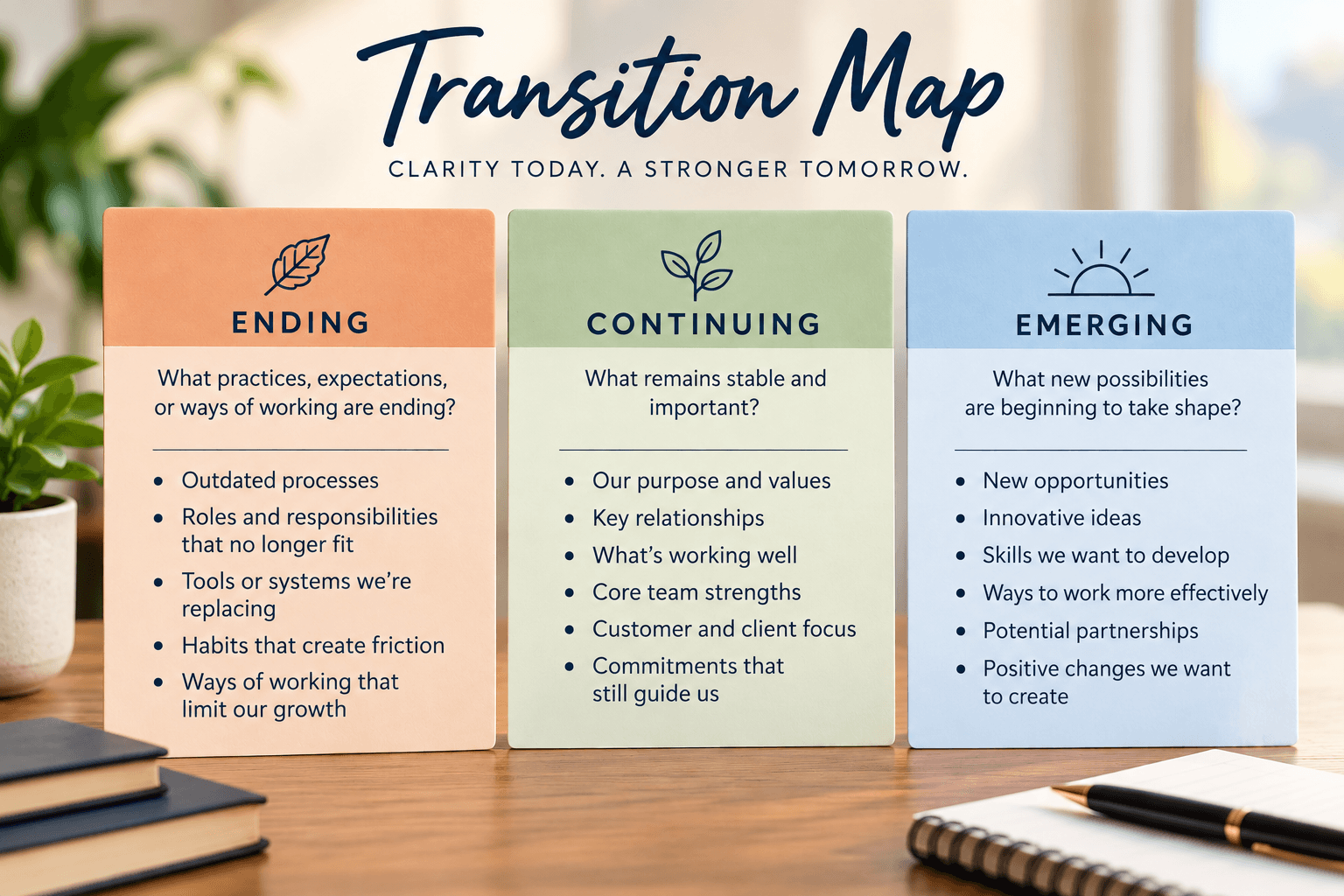
Change has always been part of organizational life. But for many employees, the pace and volume of change today can feel relentless.
Restructuring. New leadership. Shifting priorities. New technology. Mergers and acquisitions. Changing roles and expectations.
Even positive change can create uncertainty.
Leaders also have an advantage they may not fully recognize. By the time a change is announced, they may have spent weeks or months discussing it, asking questions, and adjusting to the idea. Employees may be hearing about it for the first time.
That gap matters.
Here are three ways leaders can help people navigate change more effectively.
1. Communicate Clearly and Often

During uncertainty, information gaps rarely remain empty. People fill them with assumptions, conversations, and sometimes worst case scenarios.
Leaders will not always have every answer. Decisions may still be developing or certain information may be confidential. Be clear about that. Saying, “We don’t have that answer yet, but we will share more when we do” can build more trust than vague reassurance or silence.
Keep reinforcing what you do know. What are the current priorities? What stays the same? What should employees focus on now? Where can they go with questions?
Clarity creates a sense of steadiness when the bigger picture is still taking shape.
2. Remember That Change Is Personal

An organizational chart shows boxes and reporting relationships. Employees experience something much more personal.
What does this mean for me? Will my role change? Does leadership still value my contribution? Will I be successful in the new structure?
People also process change differently. Some immediately see possibilities. Others focus first on potential risks. Previous experiences with workplace change can influence reactions as well.
This is where emotional intelligence matters. Listen before rushing to reassure or solve. Ask what people are concerned about and what would help them move forward. You do not have to agree with every concern to genuinely hear it.
3. Create Stability Where You Can

When many things are changing, consistency becomes especially valuable. Be as authentic and transparent as you can.
Maintain regular team meetings. Continue one on ones. Recognize good work. Reinforce organizational values. Clarify immediate priorities and give people something they can influence.
And remember that employees are watching their leaders. They notice tone, body language, accessibility, and composure. Leaders do not need to pretend everything is fine. They can acknowledge difficulty while communicating confidence in the team’s ability to navigate it.
People may not remember every detail of a corporate transition. They often remember how leadership showed up during it.
When the ground shifts, clarity, empathy, and steadiness matter.
Reach out to us today at info@buttimerconsulting.com or 404-949-9500 for support in guiding your organization through change!