Change has become a constant in the workplace.
New technology. Restructuring. Shifting priorities. New leaders. Changing roles. Economic uncertainty. Artificial intelligence. Teams are being asked to adapt at a pace that can leave even experienced professionals feeling unsettled.
For leaders, the challenge is greater. You are navigating your own response to change while influencing how others experience it. This is where mindful leadership becomes especially valuable.
Mindful leaders pay attention to what is happening within themselves, across their teams, and around the organization. They recognize that during periods of transition, people are watching leaders for signals. What leaders repeatedly focus on, communicate, tolerate, and reinforce can shape the emotional climate of a workplace.
Here are three ways to lead more skillfully through change.
1. Create a Transition Map
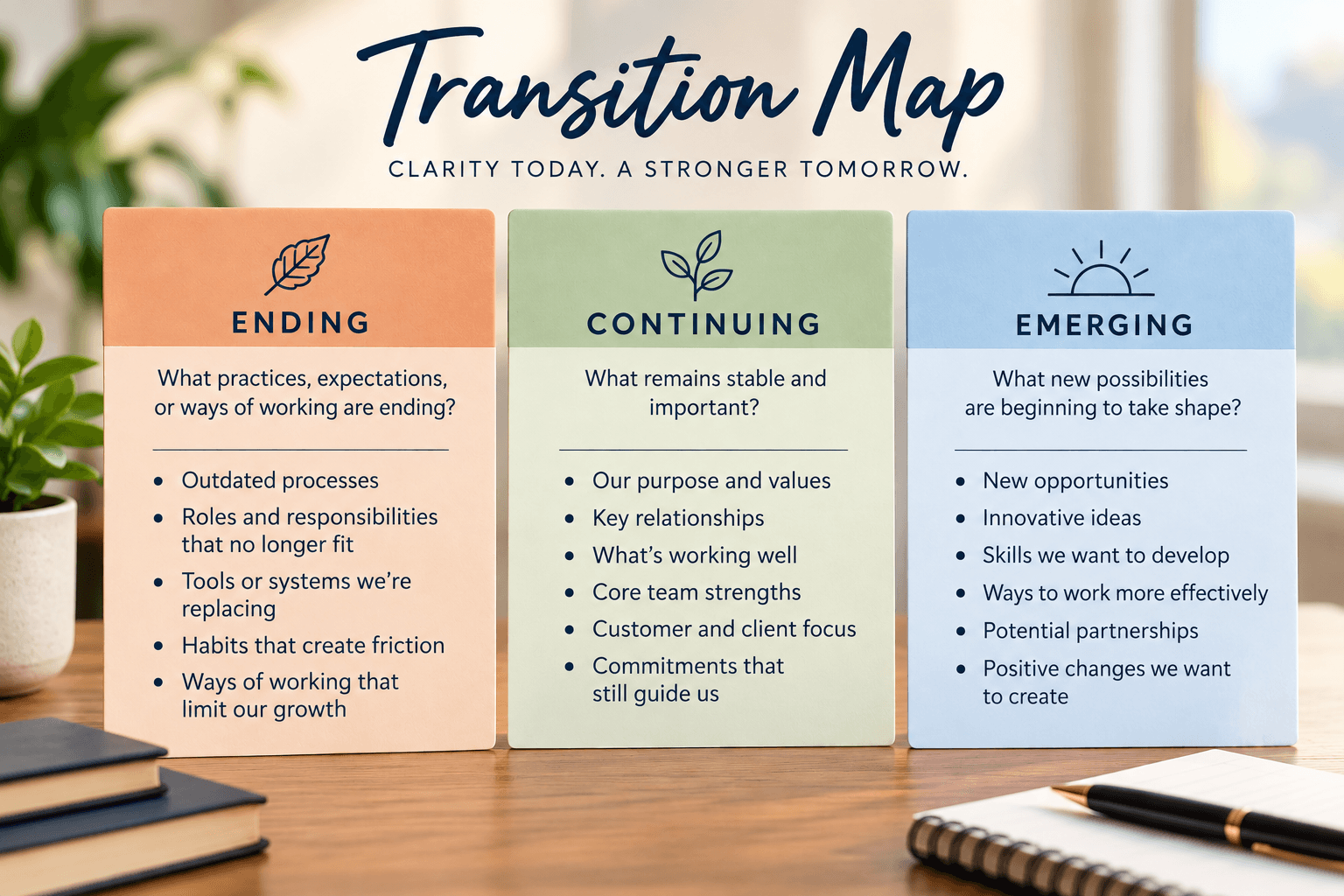
During organizational change, leaders often focus heavily on what is changing while overlooking what is staying the same.
Create three columns: Ending, Continuing, Emerging.
What practices, expectations, or ways of working are ending? What remains stable? What new possibilities are beginning to emerge?
Use the same exercise with your team. Identifying what is continuing can restore a sense of stability, while identifying what is emerging shifts attention toward possibility. This simple practice can support workplace resilience and help people see transition more clearly.
2. Conduct an Attention Audit
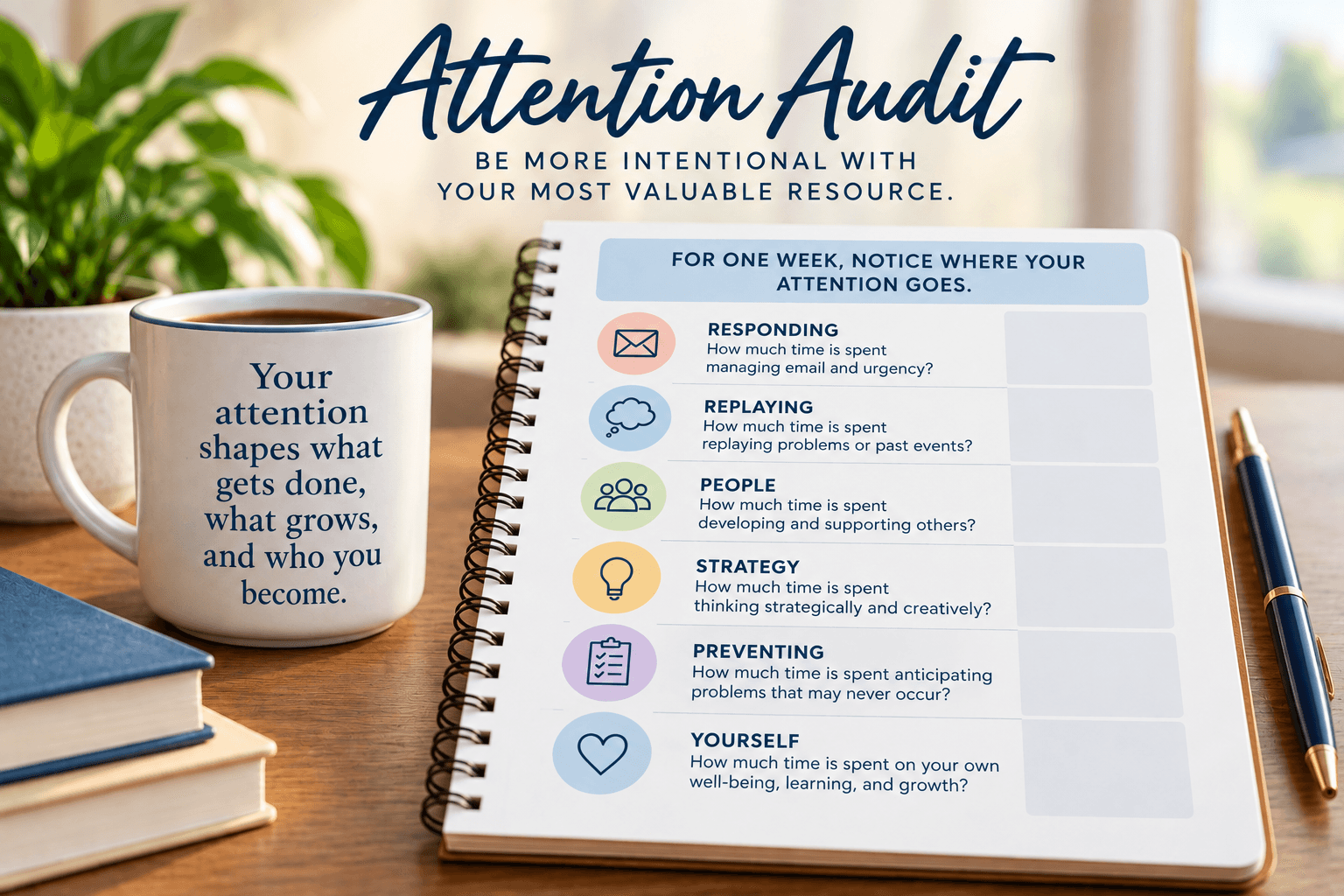
Your attention is one of your most valuable leadership resources.
For one week, notice where it goes. How much is spent responding to urgency? Replaying problems? Managing email? Thinking strategically? Developing people? Anticipating problems that never occur? Then ask a more important question: Does where I spend my attention reflect the leader I want to be?
Mindful leadership requires intentionally directing attention rather than allowing the loudest demand to claim it. During periods of rapid change, this becomes even more important.
3. Separate Facts from Forecasts

Uncertainty invites the brain to fill in missing information, and those mental forecasts can quickly become stressful. When you notice yourself anticipating a negative outcome, divide a page into two sections: What I Know and What I’m Predicting.
This distinction can reduce unnecessary mental noise and improve decision making. It also helps leaders communicate more responsibly by separating confirmed information from assumptions.
Change will continue to accelerate. Sustainable leadership requires the ability to remain present, flexible, discerning, and intentional while circumstances evolve. This question is worth asking regularly: As things change around you, what do you want to remain steady within you?
As things change around you, what do you want to remain steady within you? Reach out to us today for our premier Thriving Through Transitions keynote or training for your organization!